

Tbilisi: The Heart of Georgia
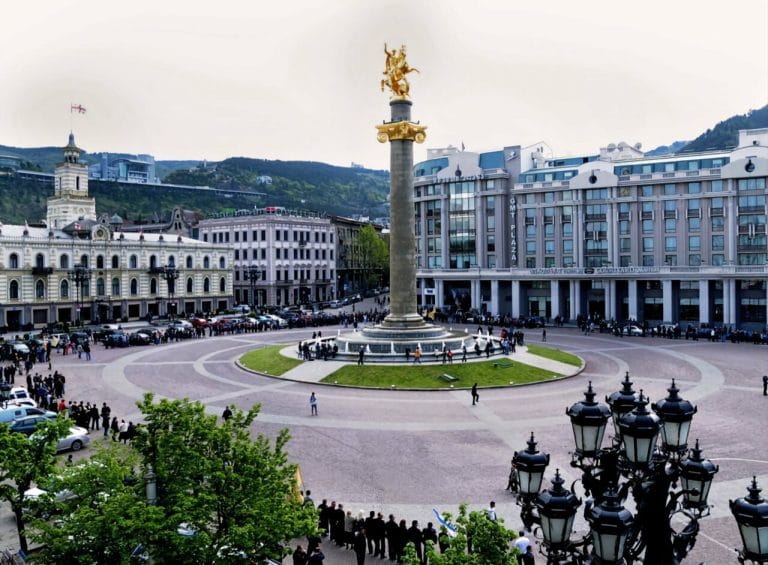
Tbilisi, the heart of Georgia, is renowned for its eclectic architecture and vibrant culture. Explore the charming Old Town with its colorful wooden balconies, visit the iconic Narikala Fortress for panoramic views, and unwind in the historic sulfur baths. The city also boasts modern landmarks like the futuristic Peace Bridge and a lively arts and nightlife scene.
Historical Heritage and Architecture
Tbilisi’s architectural landscape tells the story of nearly 1,500 years of history, where ancient traditions seamlessly blend with contemporary innovation. The city’s Old Town, known as Dzveli Tbilisi, is a UNESCO World Heritage candidate site that showcases centuries of cultural evolution. Here, narrow cobblestone streets wind between buildings that display a fascinating mix of Persian, Arab, Byzantine, and Russian influences, creating an architectural tapestry unlike anywhere else in the world.
The famous wooden balconies, or “erkeri,” are perhaps the most photographed feature of Tbilisi’s Old Town. These intricately carved structures, painted in vibrant blues, greens, and reds, hang precariously over the streets below, creating intimate spaces where residents have gathered for generations. Many of these balconies date back to the 19th century and represent a unique Georgian architectural tradition that emerged from the need to maximize living space in the densely packed historic quarter.
The Narikala Fortress, perched dramatically on a rocky hill overlooking the Mtkvari River, serves as the city’s most enduring symbol. Built in the 4th century and expanded over the centuries, this ancient citadel has witnessed the rise and fall of empires, surviving Mongol invasions, Persian sieges, and Soviet transformations. From its weathered ramparts, visitors can enjoy breathtaking 360-degree views of the city sprawling below, with the modern glass towers of the new business district creating a striking contrast against the red-tiled roofs of the historic neighborhoods.
Thermal Springs and Wellness Traditions
The sulfur baths district, known as Abanotubani, represents the very foundation of Tbilisi’s identity – legend has it that King Vakhtang Gorgasali founded the city here in the 5th century after his falcon fell into the hot springs during a hunting expedition. The district’s distinctive domed brick bathhouses, with their steaming underground chambers fed by natural hot springs, have been welcoming visitors for over a millennium. These therapeutic waters, rich in sulfur and other minerals, are believed to have healing properties for skin conditions, joint problems, and respiratory ailments.
The bathing ritual itself is a cultural experience, involving traditional scrubbing with coarse mittens called “kisi,” followed by relaxation in private or communal pools heated by the earth’s natural geothermal energy. The Orbeliani Baths, with their stunning Persian-style blue mosaics, and the Royal Baths, favored by Russian poets and writers, continue to attract both locals and international visitors seeking relaxation and cultural immersion.
Modern Marvels and Urban Development
Contemporary Tbilisi showcases Georgia’s ambitious vision for the future through striking modern architecture that complements rather than competes with its historic core. The Peace Bridge, designed by Italian architect Michele de Lucchi, spans the Mtkvari River like a luminous serpent, its glass and steel structure illuminated by thousands of LED lights that create mesmerizing patterns after dark. This pedestrian bridge has become an instant icon, symbolizing Georgia’s bridge between Europe and Asia, tradition and modernity.
The Rike Park area exemplifies Tbilisi’s urban renewal efforts, featuring the modernist Concert Hall and Exhibition Center designed by Italian architects Massimiliano and Doriana Fuksas. The building’s distinctive white shell-like structure houses world-class performance spaces and has become a hub for international cultural events. Nearby, the aerial tramway connects the park to the Narikala Fortress, offering visitors a thrilling ride above the city while providing spectacular views of both old and new Tbilisi.
Cultural Life and Artistic Expression
Tbilisi’s cultural scene pulses with creative energy, from traditional Georgian polyphonic singing echoing through ancient churches to cutting-edge contemporary art exhibitions in converted Soviet-era buildings. The city’s numerous theaters, including the renowned Rustaveli Theatre and the Marjanishvili Theatre, continue to stage both classical Georgian works and international productions, maintaining the country’s proud theatrical traditions.
The Fabrika complex, housed in a former Soviet sewing factory, exemplifies Tbilisi’s creative renaissance. This cultural space combines artist studios, boutique accommodations, restaurants, and event venues, creating a dynamic environment where local and international creatives collaborate and showcase their work. The complex regularly hosts art exhibitions, music festivals, and cultural events that attract visitors from across the region.
Museums throughout the city preserve and celebrate Georgia’s rich heritage, from the Georgian National Museum’s impressive archaeological collections to the Open Air Museum of Ethnography, which showcases traditional Georgian architecture and lifestyle from different regions of the country. The Tbilisi History Museum, located in a beautiful 19th-century building, provides comprehensive insights into the city’s complex past and its role as a crossroads of civilizations.
Culinary Adventures and Nightlife
The gastronomic scene in Tbilisi reflects the city’s position at the crossroads of Europe and Asia, offering everything from traditional Georgian cuisine to innovative fusion restaurants. Local establishments serve authentic dishes like khachapuri (cheese-filled bread), khinkali (soup dumplings), and mtsvadi (grilled meat), often accompanied by natural Georgian wines that represent some of the world’s oldest winemaking traditions.
As darkness falls, Tbilisi transforms into one of the region’s most exciting nightlife destinations. The city’s club scene has gained international recognition, with venues ranging from intimate wine bars housed in historic cellars to massive techno clubs that attract world-renowned DJs. The Bassiani club, located beneath the Dinamo Arena stadium, has become legendary among electronic music enthusiasts, while rooftop bars offer more relaxed environments with stunning city views and craft cocktails featuring Georgian spirits and ingredients.
Batumi: Pearl of the Black Sea
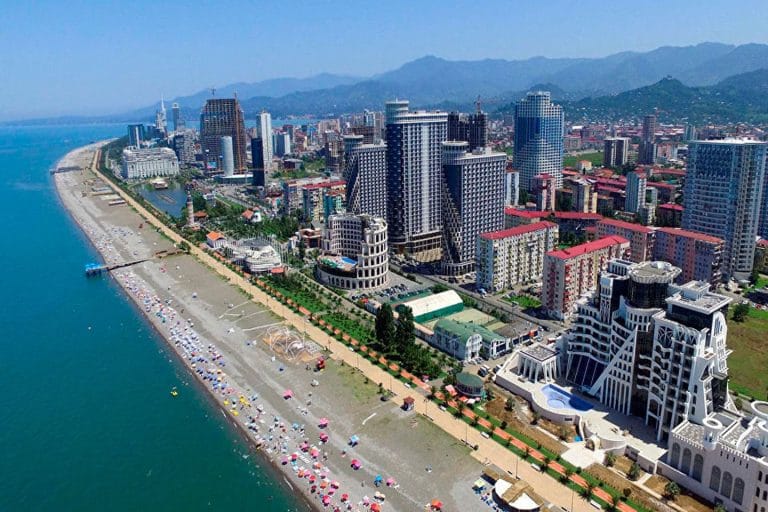
Often referred to as the “Pearl of the Black Sea,” Batumi is a stunning seaside city known for its subtropical climate and blend of modern and traditional influences. Highlights include the lush Batumi Botanical Garden, the Alphabet Tower, and the dynamic Piazza Square. The city’s nightlife and beachside promenade add to its allure.
Subtropical Paradise and Natural Wonders
Batumi’s unique position along Georgia’s Black Sea coast creates a microclimate that supports an extraordinary diversity of flora and fauna rarely found elsewhere in the region. The city enjoys over 250 sunny days per year, with mild winters and warm, humid summers that allow palm trees, citrus groves, and exotic flowering plants to flourish alongside traditional Georgian vegetation. This subtropical environment transforms Batumi into a year-round destination where visitors can experience Mediterranean-like conditions just hours away from the snow-capped peaks of the Greater Caucasus Mountains.
The Batumi Botanical Garden, established in 1912, spans over 100 hectares of terraced hillsides overlooking the Black Sea, making it one of the largest and most diverse botanical collections in the former Soviet Union. The garden houses more than 5,000 plant species from around the world, organized into geographical zones that showcase flora from Australia, New Zealand, the Himalayas, North and South America, and the Mediterranean basin. Visitors can wander through bamboo groves, eucalyptus forests, and Japanese gardens while enjoying panoramic views of the coastline below. The garden’s microclimate zones allow tropical and subtropical plants to thrive, creating an almost otherworldly landscape where visitors might encounter everything from giant sequoias to delicate orchids within a single afternoon.
The coastline itself features a unique combination of pebble and black sand beaches, created by volcanic activity and centuries of erosion from the nearby mountains. The sea temperature remains pleasant for swimming from May through October, while the coastal winds provide ideal conditions for water sports and sailing throughout much of the year.
Architectural Fusion and Urban Landmarks
Batumi’s skyline represents one of the most dramatic architectural transformations in the South Caucasus, where ambitious modern construction projects stand alongside beautifully preserved 19th-century buildings and Soviet-era monuments. The city’s building boom has created a distinctive urban landscape that combines Las Vegas-style entertainment architecture with thoughtful preservation of historical structures.
The Alphabet Tower, standing 130 meters tall, serves as both a celebration of Georgian linguistic heritage and a stunning observation platform. This cylindrical structure incorporates all 33 letters of the Georgian alphabet into its design, spiraling upward in a helical pattern that can be illuminated in various colors for special occasions. Visitors can take high-speed elevators to the observation deck and revolving restaurant at the top, offering 360-degree views of the city, mountains, and sea. The tower represents Georgia’s pride in its unique alphabet, one of only 14 alphabetic writing systems in use worldwide.
Piazza Square exemplifies Batumi’s commitment to creating vibrant public spaces that blend European elegance with Georgian hospitality. This pedestrian plaza, designed with Italian architectural influences, features colorful facades, outdoor cafes, and a central fountain that becomes the focal point for cultural events and celebrations. The square’s stained-glass roof canopy provides shelter during the frequent afternoon showers while creating a magical interplay of colored light throughout the day. Surrounding buildings house boutique hotels, restaurants, and cultural venues that maintain the square’s role as a social and cultural hub.
The Medea Monument, a 130-meter-tall statue celebrating the mythological princess of Colchis (ancient western Georgia), has become another iconic symbol of the city. The golden figure holds the Golden Fleece, referencing the ancient Greek myth of Jason and the Argonauts, while celebrating Georgia’s role in classical mythology and its historical connections to ancient Greek civilization.
Coastal Culture and Maritime Heritage
The Batumi Boulevard, stretching for over 7 kilometers along the Black Sea coast, represents one of the finest waterfront promenades in Eastern Europe. This beautifully landscaped walkway combines carefully maintained gardens, artistic installations, and recreational facilities with stunning sea views and fresh mountain air. The boulevard features dedicated lanes for pedestrians, cyclists, and electric vehicles, creating a car-free environment where families can stroll safely while enjoying street performers, outdoor cafes, and impromptu cultural events.
Along the promenade, visitors encounter numerous sculptures and installations that celebrate both Georgian culture and international artistic exchange. The famous “Ali and Nino” moving sculpture, depicting the tragic love story from Kurban Said’s novel, features two giant figures that approach each other, merge, and separate in an endless cycle, symbolizing the eternal nature of love and the complex cultural dynamics of the Caucasus region.
The old port area has been transformed into a modern marina and cultural district, where traditional Georgian fishing boats share space with luxury yachts and tour vessels. The maritime museum showcases the region’s rich naval history, from ancient Colchian seafaring traditions to modern Black Sea commerce, while the adjacent fish markets and seaside restaurants offer visitors authentic tastes of local maritime cuisine.
Entertainment and Gaming Capital
Batumi has emerged as the gambling and entertainment capital of the South Caucasus, with numerous casinos, luxury hotels, and entertainment complexes that attract visitors from across the region. The city’s liberal gaming laws and strategic location make it a popular destination for tourists from countries where gambling is restricted, creating a unique atmosphere that combines resort-style relaxation with Las Vegas-inspired excitement.
The Sheraton Batumi Hotel and other luxury properties offer world-class amenities, including rooftop pools, spa facilities, and fine dining restaurants that showcase both international cuisine and innovative interpretations of Georgian culinary traditions. These establishments often feature panoramic views of the Black Sea and provide bases for exploring both the city’s urban attractions and the natural wonders of the surrounding Adjara region.
Vibrant Nightlife and Cultural Scene
As the sun sets over the Black Sea, Batumi transforms into one of the region’s most dynamic nightlife destinations. The city’s entertainment district comes alive with rooftop bars, beachside clubs, and intimate wine bars that cater to every taste and preference. Many venues feature outdoor terraces that take advantage of the mild climate, allowing patrons to enjoy cocktails and conversation under the stars while listening to the gentle sounds of waves washing against the shore.
The cultural calendar includes numerous festivals throughout the year, from the Batumi International Art-House Film Festival to traditional Georgian music and dance performances in the city’s parks and squares. The Batumi Archaeological Museum and the Adjara Art Museum provide insights into the region’s rich cultural heritage, while contemporary galleries showcase works by both established and emerging Georgian artists.
Live music venues throughout the city feature everything from traditional Georgian polyphonic singing to contemporary jazz and electronic music, often incorporating the sounds and rhythms that reflect Batumi’s position as a meeting point between European, Asian, and Middle Eastern cultures. The summer season brings outdoor concerts and festivals that transform the entire boulevard into a celebration of music, art, and international friendship.
Local restaurants and cafes stay open late into the evening, serving everything from traditional Adjarian khachapuri (cheese-filled bread topped with a raw egg) to fresh seafood caught daily in the Black Sea. The dining scene reflects the city’s cosmopolitan character, with establishments offering cuisine from around the world while maintaining strong connections to Georgian culinary traditions and the abundant local ingredients provided by the region’s fertile subtropical environment.
Mtskheta: Ancient Capital and Spiritual Heart of Georgia
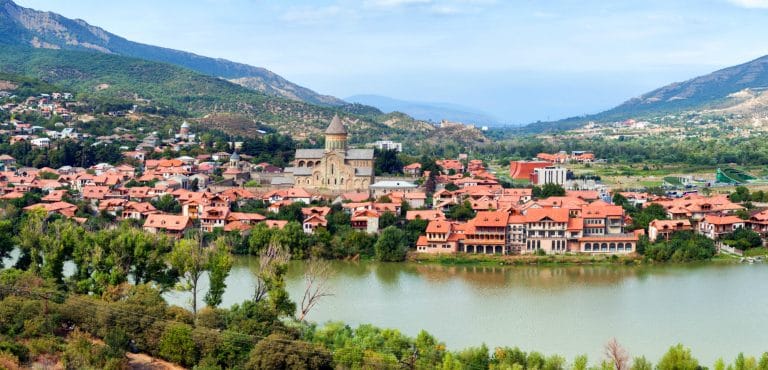
As one of the oldest cities in Georgia and a UNESCO World Heritage Site, Mtskheta is a treasure trove of history and spirituality. It is home to the stunning Svetitskhoveli Cathedral, believed to house Christ’s robe, and the hilltop Jvari Monastery, offering breathtaking views of the confluence of the Aragvi and Mtkvari rivers.
Sacred Foundation and Historical Legacy
Mtskheta stands as Georgia’s spiritual cradle and former royal capital, with archaeological evidence suggesting continuous habitation for over 4,000 years. This ancient city served as the political and religious center of the early Georgian kingdom of Iberia from the 3rd century BC until the 5th century AD, when the capital was moved to Tbilisi. The city’s strategic location at the confluence of two major rivers made it a natural hub for trade routes connecting Europe and Asia, contributing to its prosperity and cultural significance throughout antiquity.
The conversion of Georgia to Christianity in 337 AD began in Mtskheta under the influence of Saint Nino, a Cappadocian woman who became Georgia’s patron saint. According to Georgian Orthodox tradition, Saint Nino arrived in Mtskheta carrying a cross made of grapevines bound with her own hair, and through her miracles and preaching, she converted King Mirian III and the Georgian people to Christianity. This pivotal moment established Georgia as the second nation in the world to adopt Christianity as its official religion, after Armenia, making Mtskheta the birthplace of Georgian Orthodox faith.
The city’s designation as a UNESCO World Heritage Site in 1994 recognizes not only its outstanding universal value but also its role as a living testimony to Georgia’s ancient civilization and the development of medieval church architecture in the Caucasus. The historic monuments of Mtskheta represent exceptional examples of ecclesiastical architecture from the early feudal period, demonstrating the high level of artistic and technical achievement reached by Georgian master builders.
Svetitskhoveli Cathedral: Georgia’s Crown Jewel
The magnificent Svetitskhoveli Cathedral, whose name translates to “Life-Giving Pillar,” stands as one of the most sacred sites in Georgian Orthodox Christianity and represents the pinnacle of medieval Georgian architecture. Built between 1010 and 1029 AD by the master architect Arsukidze, this monumental structure replaced earlier churches that had stood on the same sacred ground for over seven centuries.
According to ancient Georgian chronicles and religious tradition, the cathedral houses the robe of Jesus Christ, brought to Mtskheta by a Georgian Jew named Elias who had acquired it in Jerusalem following the crucifixion. The legend states that when Elias’s sister Sidonia touched the robe, she died from overwhelming divine power, and the garment could not be removed from her grasp, leading to her burial with the robe. From her grave grew a cedar tree of extraordinary size, which became the source of the miraculous pillar that gives the cathedral its name.
The cathedral’s architectural design represents a perfect fusion of traditional Georgian building techniques with Byzantine influences, creating a uniquely Georgian ecclesiastical style that would influence church construction throughout the region for centuries. The exterior walls feature intricate stone carvings depicting religious scenes, historical events, and symbolic motifs, while the interior contains some of the finest examples of medieval Georgian fresco painting and religious art.
Within the cathedral’s walls lie the tombs of Georgian kings and queens, including the burial sites of King Vakhtang Gorgasali, the legendary founder of Tbilisi, and other members of the Bagrationi royal dynasty. These royal burials underscore the cathedral’s role not only as a religious center but also as a symbol of Georgian national identity and continuity. The cathedral continues to serve as the seat of the Archbishop of Mtskheta and Tbilisi and remains one of the most important pilgrimage destinations for Georgian Orthodox believers worldwide.
Jvari Monastery: Spiritual Beacon Above the Rivers
Perched dramatically on a rocky outcrop overlooking the confluence of the Aragvi and Mtkvari rivers, the Jvari Monastery represents one of the finest examples of early Georgian cross-dome architecture and holds profound significance in Georgian Christian heritage. Built in the late 6th century on the site where Saint Nino erected her first cross upon arriving in Georgia, this UNESCO World Heritage monument embodies the spiritual foundation of Georgian Christianity.
The monastery’s name, meaning “Cross,” reflects its origin story and sacred purpose. The small church, constructed around 585-604 AD, showcases the architectural innovations that would become hallmarks of Georgian ecclesiastical design. The building’s perfectly proportioned cross-dome structure, with its central dome supported by four pillars, creates an interior space that draws the eye heavenward while maintaining intimate human scale. The exterior walls feature beautiful relief carvings depicting religious scenes and inscriptions in ancient Georgian script, providing valuable insights into early medieval Georgian art and culture.
From the monastery’s elevated position, visitors experience one of Georgia’s most breathtaking panoramic views. The convergence of the two rivers below creates a dramatic natural amphitheater, while the ancient city of Mtskheta spreads across the valley floor, dominated by the imposing silhouette of Svetitskhoveli Cathedral. The surrounding landscape, with its rolling hills covered in vineyards and agricultural terraces, represents the timeless Georgian countryside that has inspired poets and pilgrims for over a millennium.
The monastery played a crucial role in preserving Georgian Orthodox traditions during periods of foreign occupation and political upheaval. Monks maintained manuscript collections, religious artifacts, and liturgical practices that might otherwise have been lost to history. The site continues to attract both religious pilgrims seeking spiritual renewal and cultural tourists drawn by its architectural beauty and historical significance.
Archaeological Treasures and Ancient Mysteries
The archaeological significance of Mtskheta extends far beyond its famous religious monuments, encompassing extensive excavations that have revealed layers of civilization spanning millennia. The ancient city of Armaztsikhe, located on a hill overlooking modern Mtskheta, served as the royal residence and administrative center of the Iberian kingdom. Excavations have uncovered palace foundations, defensive walls, burial chambers, and artifacts that provide invaluable insights into pre-Christian Georgian culture and society.
The Armaztsikhe archaeological complex has yielded remarkable discoveries, including the famous Armaziskhevi burial ground with its richly decorated tombs containing gold and silver jewelry, weapons, and ceremonial objects that demonstrate the sophisticated craftsmanship and international connections of ancient Georgian artisans. These finds reveal trade relationships extending from the Black Sea to the Mediterranean, indicating Mtskheta’s role as a cosmopolitan center in the ancient world.
The nearby Samtavro Monastery, another significant religious site in Mtskheta, houses the graves of King Mirian and Queen Nana, the royal couple who first embraced Christianity in Georgia. The monastery’s 11th-century church contains beautiful frescoes and serves as a pilgrimage site for those seeking the intercession of Saint Nino, whose small cell within the monastery grounds marks the place where she spent her final years.
Cultural Continuity and Modern Pilgrimage
Today’s Mtskheta successfully balances its role as a living religious center with its responsibilities as a cultural heritage site and tourist destination. The city continues to host major Orthodox celebrations, including the festival of Svetitskhoveli in October, when thousands of pilgrims gather to venerate the sacred robe and participate in ancient liturgical traditions that have been maintained for over sixteen centuries.
The traditional craft industries that once flourished in medieval Mtskheta have experienced a renaissance, with local artisans producing religious icons, traditional jewelry, and handwoven textiles using techniques passed down through generations. These craftspeople work in workshops that often occupy buildings dating from the medieval period, creating a tangible connection between past and present that enriches the visitor experience.
The Georgian wine tradition, deeply rooted in the Mtskheta region’s favorable climate and ancient viticultural knowledge, offers another dimension to the city’s cultural heritage. Local wineries produce wines using traditional Georgian methods, including fermentation in buried clay vessels called qvevri, a technique that UNESCO has recognized as an Intangible Cultural Heritage of Humanity. Visitors can experience wine tastings that combine historical education with appreciation for Georgian culinary traditions, often accompanied by polyphonic singing and traditional Georgian hospitality that has welcomed travelers to this sacred city for thousands of years.
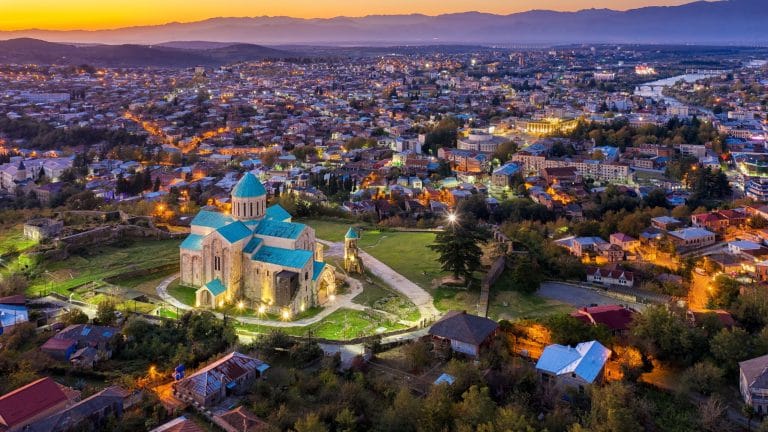
Kutaisi – Known for its laid-back atmosphere, Kutaisi is a city rich in history and natural beauty. Must-visit attractions include the Gelati Monastery, a masterpiece of medieval Georgian architecture, and the Bagrati Cathedral. Nearby, you can explore the Prometheus Cave, featuring impressive stalactites and underground lakes.
Sighnaghi: City of Love and Gateway to Georgian Wine Country
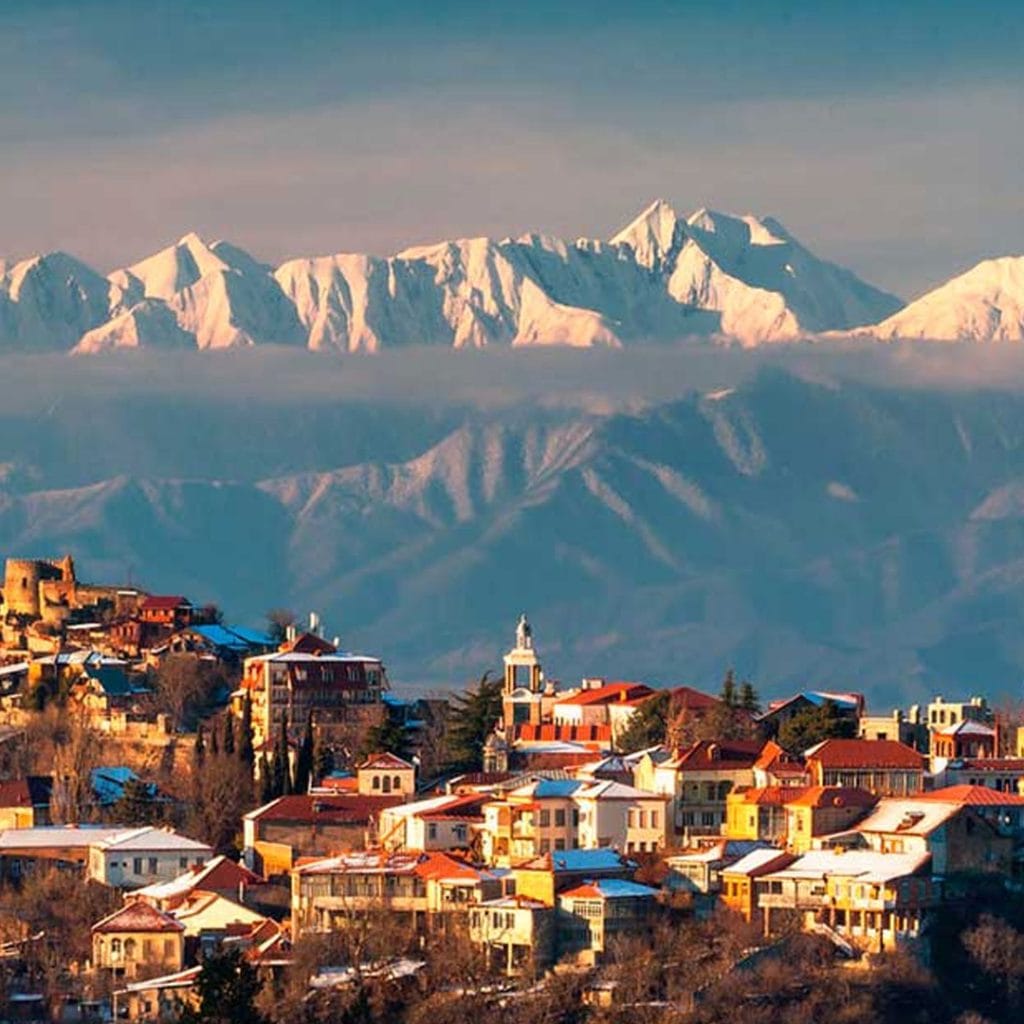
Perched atop a hill overlooking the Alazani Valley, Sighnaghi is often called the “City of Love” for its romantic ambiance. This picturesque town is known for its well-preserved city walls, charming cobblestone streets, and proximity to the Kakheti wine region. Visitors can enjoy stunning views of the valley and the Caucasus Mountains.
Romantic Heritage and Architectural Charm
Sighnaghi’s designation as the “City of Love” stems from both its breathtaking romantic setting and a practical tradition that has made it a popular destination for couples seeking to marry. The town’s 24-hour marriage registration office allows couples to wed at any time of day or night, creating a unique romantic appeal that draws visitors from across Georgia and neighboring countries. This charming custom, combined with the town’s fairy-tale atmosphere, has established Sighnaghi as Georgia’s premier romantic getaway destination.
The town’s architecture reflects a fascinating blend of Georgian and Italian influences, dating back to the 18th century when King Heraclius II commissioned Italian architects to design and build this fortified settlement. The result is a uniquely harmonious townscape where traditional Georgian building techniques merge seamlessly with Mediterranean architectural elements, creating structures that seem to emerge organically from the hillside landscape. The buildings feature distinctive red-tiled roofs, wooden balconies with intricate carvings, and pastel-colored facades that change hue with the shifting light throughout the day.
Walking through Sighnaghi’s narrow cobblestone streets feels like stepping into a living museum where every corner reveals new architectural details and unexpected vistas. The town’s compact size, with a population of just over 2,000 residents, creates an intimate atmosphere where visitors can easily explore on foot while discovering hidden courtyards, artisan workshops, and family-run restaurants that serve traditional Kakhetian cuisine in settings that have remained largely unchanged for centuries.
The careful preservation and restoration efforts undertaken in recent years have transformed Sighnaghi into one of Georgia’s most photogenic destinations, where modern amenities blend invisibly with historical authenticity. The town’s commitment to maintaining its architectural integrity while accommodating contemporary tourism needs serves as a model for heritage conservation throughout the region.
Ancient Fortifications and Defensive Mastery
The medieval city walls that encircle Sighnaghi represent one of the most impressive and well-preserved fortification systems in Georgia, stretching for approximately 4 kilometers around the entire settlement and extending down the hillside to protect water sources and agricultural areas. Built in the 18th century during the reign of King Heraclius II, these fortifications were designed to protect the local population from invasions by Dagestani raiders who frequently swept down from the North Caucasus Mountains.
The defensive system includes 23 towers, each designed for specific strategic purposes and named after local villages whose residents were assigned to defend particular sections during times of siege. These towers, rising majestically above the surrounding landscape, offer visitors spectacular vantage points for photography and sightseeing while providing tangible connections to Georgia’s turbulent military history. The walls themselves incorporate innovative architectural features, including hidden passages, storage chambers, and defensive positions that demonstrate the sophisticated military engineering capabilities of 18th-century Georgian builders.
Walking along the restored sections of the city walls provides visitors with unique perspectives of both the town’s interior and the magnificent landscape beyond. The fortifications create a romantic promenade where couples and families can stroll while enjoying panoramic views that extend across the Alazani Valley to the snow-capped peaks of the Greater Caucasus Mountains. The interplay between the ancient stone walls and the natural beauty of the surrounding countryside creates photographic opportunities that capture the essence of Georgia’s dramatic landscape and rich cultural heritage.
The ongoing restoration and maintenance of these fortifications reflects Georgia’s commitment to preserving its architectural legacy while making historical sites accessible to contemporary visitors. The walls serve not only as tourist attractions but also as symbols of Georgian resilience and the enduring human desire to create beauty even in structures designed for defense.
Heart of Georgian Wine Culture
Sighnaghi’s location in the heart of the Kakheti region places it at the epicenter of Georgian wine culture, where archaeological evidence suggests continuous wine production for over 8,000 years. The surrounding Alazani Valley provides ideal conditions for viticulture, with its fertile alluvial soils, favorable microclimate, and perfect balance of sunshine and rainfall that allows both indigenous Georgian grape varieties and international cultivars to flourish.
The traditional Georgian winemaking method, using buried clay vessels called qvevri, originated in this region and continues to be practiced by local families who have passed down their techniques through countless generations. UNESCO’s recognition of this ancient method as an Intangible Cultural Heritage of Humanity underscores the global significance of Kakhetian wine traditions and their role in preserving one of the world’s oldest continuous winemaking cultures.
Visitors to Sighnaghi can explore numerous family-owned wineries and larger commercial operations that offer tastings, tours, and educational experiences designed to showcase the diversity and quality of Georgian wines. These experiences often include traditional Georgian hospitality customs, where wine tasting is accompanied by elaborate feasts featuring local specialties, live music, and the ancient Georgian tradition of toasting, led by a tamada (toastmaster) who guides guests through ritualized celebrations that can last for hours.
The town serves as an ideal base for wine tours throughout the broader Kakheti region, where visitors can discover famous wine villages like Tsinandali, Gurjaani, and Saperavi, each with its own distinctive terroir and winemaking traditions. The region produces renowned wines from indigenous grape varieties such as Saperavi, Rkatsiteli, and Kisi, as well as international varieties that have adapted beautifully to the local conditions.
Natural Splendor and Panoramic Vistas
The breathtaking views from Sighnaghi encompass one of Georgia’s most spectacular natural panoramas, where the fertile Alazani Valley stretches toward the horizon while the majestic Caucasus Mountains provide a dramatic backdrop that changes character with the seasons and time of day. During clear weather, visitors can see across the valley into Azerbaijan, emphasizing the region’s position at the crossroads of different cultures and civilizations.
The valley floor, covered with vineyards, orchards, and agricultural fields, creates a patchwork of colors that shifts throughout the year from the fresh greens of spring through the golden hues of autumn harvest season. The Alazani River, meandering through the valley bottom, supports diverse ecosystems that provide habitat for numerous bird species and other wildlife, making the area attractive to nature photographers and bird watchers.
The surrounding landscape offers numerous hiking opportunities for visitors seeking to explore beyond the town’s borders. Trails lead through ancient forests, along mountain ridges, and to hidden monasteries and churches that dot the countryside. These excursions provide opportunities to experience the natural beauty that has inspired Georgian poets and artists for centuries while encountering traditional rural life that continues much as it has for generations.
The region’s climate supports not only grape cultivation but also the production of fruits, nuts, and vegetables that form the foundation of Kakhetian cuisine. Local markets showcase the abundance of fresh produce available throughout much of the year, from early spring herbs and vegetables through late autumn nuts and preserved foods that sustain communities through the winter months.
Cultural Traditions and Artistic Heritage
Sighnaghi and the surrounding Kakheti region maintain vibrant cultural traditions that reflect centuries of Georgian heritage while adapting to contemporary realities. The town hosts numerous festivals throughout the year that celebrate everything from wine harvest traditions to religious holidays, providing visitors with opportunities to experience authentic Georgian culture in its natural setting.
Traditional Georgian polyphonic singing, recognized by UNESCO as a Masterpiece of Oral and Intangible Heritage of Humanity, thrives in this region where local choirs perform both sacred and secular music that has been passed down through oral tradition for over a thousand years. These musical traditions often accompany the elaborate feast customs that are central to Georgian social life, creating memorable experiences for visitors who participate in traditional celebrations.
Local artisans continue to practice traditional crafts including pottery, woodworking, textile production, and metalworking, often using techniques and designs that have remained unchanged for centuries. Many of these craftspeople welcome visitors to their workshops, where they demonstrate their skills while explaining the cultural significance of their work and its connections to broader Georgian artistic traditions.
The Sighnaghi Museum houses important collections of works by Niko Pirosmani, Georgia’s most famous naive artist, whose paintings of Georgian rural life and traditions provide unique insights into the culture and customs of this region during the late 19th and early 20th centuries. Pirosmani’s distinctive style and subjects capture the essence of Georgian hospitality, celebration, and connection to the land that continues to characterize life in Kakheti today.
Culinary Excellence and Gastronomic Adventures
The cuisine of the Kakheti region represents some of Georgia’s finest culinary traditions, where abundant local ingredients combine with time-tested recipes to create dishes that perfectly complement the area’s renowned wines. Sighnaghi’s restaurants and family-run establishments offer visitors authentic tastes of Kakhetian specialties that reflect the region’s agricultural abundance and cultural heritage.
Local specialties include churchkhela, a traditional candy made from grape juice and nuts that serves as both a nutritious snack and a symbol of Georgian hospitality. The preparation of churchkhela involves ancient techniques that require skill and patience, as grape juice is repeatedly heated and cooled while being formed around strings of walnuts or hazelnuts to create colorful, sausage-shaped confections that can be stored for months.
The region’s cheese-making traditions produce distinctive varieties that pair beautifully with local wines, while fresh vegetables, herbs, and fruits from local gardens provide the foundation for seasonal dishes that celebrate the natural abundance of the Alazani Valley. Traditional bread-making techniques produce distinctive regional varieties that accompany every meal, while local honey, preserved fruits, and pickled vegetables add complexity and variety to the Kakhetian table.
Many restaurants and guesthouses offer cooking classes where visitors can learn to prepare traditional dishes while gaining insights into Georgian culinary philosophy, which emphasizes the social and spiritual aspects of food preparation and consumption. These experiences often conclude with traditional feasts where participants can enjoy the fruits of their labor while participating in the ancient Georgian customs of toasting and celebration that make dining in this region an unforgettable cultural experience.
 Contact Us Today
View our tours
Contact Us Today
View our tours
 EN
EN  RU
RU